Administration & Operations
Elise Beale
Associate Director, Human Resources

Elise Beale joined TIFF in 2026 and serves as Associate Director, Human Resources, where she manages the full spectrum of HR functions.

Prior to joining TIFF, Elise served as an HR Generalist at STP Investment Services, where she supported all aspects of the employee lifecycle.

She holds a BA from Temple University and is SHRM certified.

More Team Members
Ava Del Salto
Senior Analyst, Legal & Compliance
Baba Ary Toubo
Associate Director, Investment Performance Reporting
Berkley Velez
Senior Associate - Paralegal
Caroline Hertz
Senior Fund Accountant
Work With Us
If you are interested in working with us, please check out our current openings.
Buyouts Insider: Emerging PE Managers Adopting Hybrid Structures

Brendon Parry, CFA, Head of Private Markets, Deputy CIO, was quoted in a recent article in Buyouts Insider discussing the rise of novel private equity fund structures. Parry discussed TIFF’s investment philosophy in the independent sponsor market and shared why he believes the independent sponsor structure remains advantageous compared to newer hybrid structures.

Read the full article here
Disclaimer: To access this article, a subscription is necessary. Please note that TIFF does not possess the rights to distribute this content.

The materials are being provided for informational purposes only and constitute neither an offer to sell nor a solicitation of an offer to buy securities. These materials also do not constitute an offer or advertisement of TIFF’s investment advisory services or investment, legal or tax advice. Opinions expressed herein are those of TIFF and are not a recommendation to buy or sell any securities.

These materials may contain forward-looking statements relating to future events. In some cases, you can identify forward-looking statements by terminology such as “may,” “will,” “should,” “expect,” “plan,” “intend,” “anticipate,” “believe,” “estimate,” “predict,” “potential,” or “continue,” the negative of such terms or other comparable terminology. Although TIFF believes the expectations reflected in the forward-looking statements are reasonable, future results cannot be guaranteed.

Ownership and Influence: Lessons from Japan

Executive Summary

  • The rules of corporate behavior in Japan are changing, increasing the investment case for active management and shareholder engagement. Change is being driven by governance reform, pressure from the Tokyo Stock Exchange, the unwinding of cross shareholdings, and demographic pressures.
  • The dispersion of speed and change integration is creating an opportunity for active management that can discern the differences between companies and help accelerate them.
  • Across public markets, a growing share of equity ownership now sits with passive vehicles, systematic strategies, and shorter horizon investors, which are generally not designed to exercise detailed company-specific influence.

From Cheap Market to Changing Market

The rules of corporate behavior in Japan are changing, increasing the investment case for active management and shareholder engagement. For decades, many Japanese companies prioritized stability, employment, bank relationships, supplier relationships, and other stakeholder objectives over shareholder returns. Cross-shareholding reinforced that system by placing large ownership stakes in the hands of friendly firms that tended to support existing management teams and resisted outside pressure. The result was often inefficient capital allocation, low returns on equity, excess cash, and limited accountability to minority shareholders.

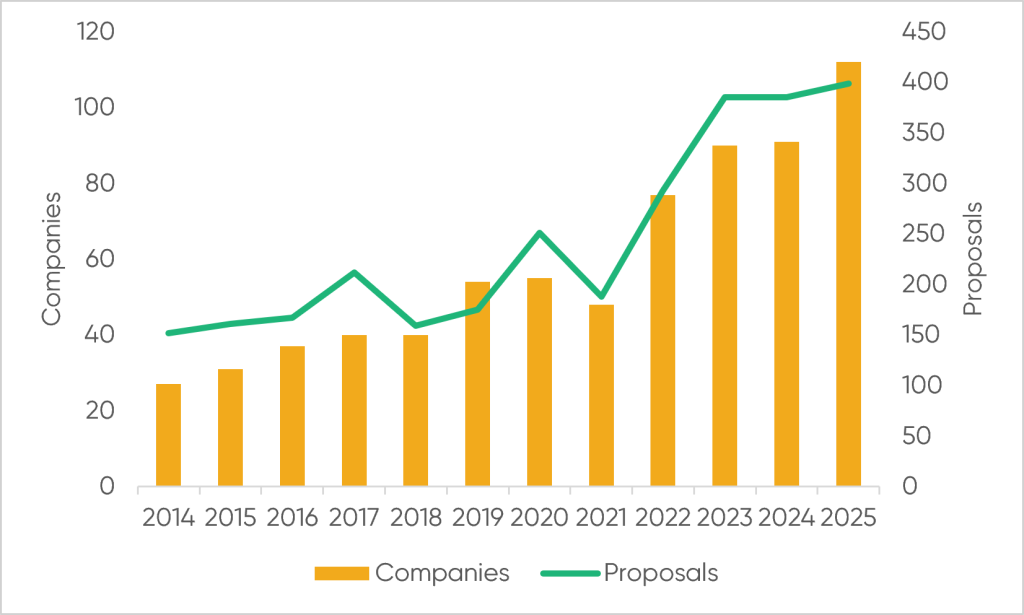
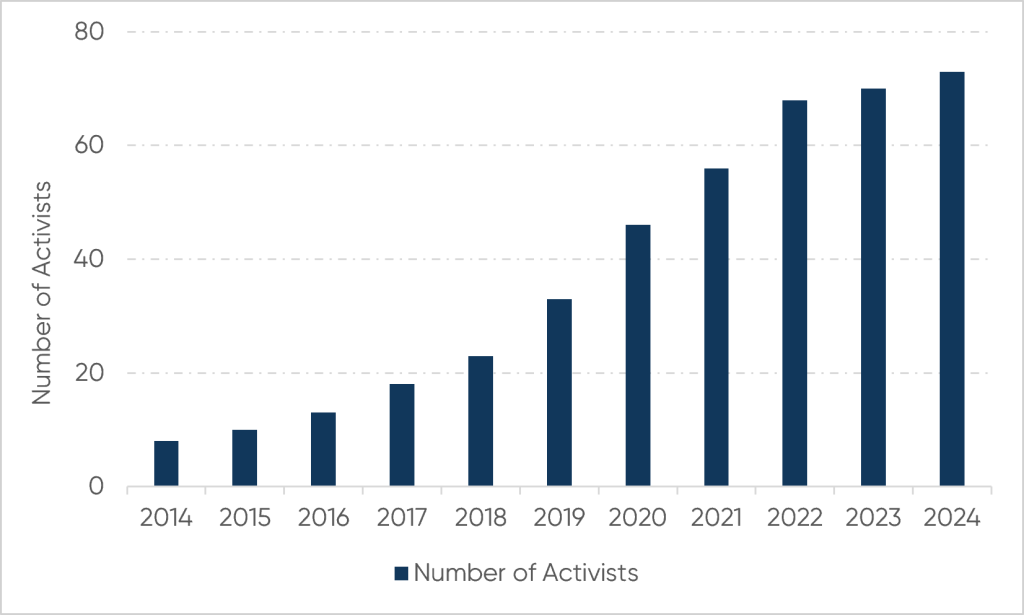
That environment is shifting, with a meaningful increase in shareholder engagement now that change feels feasible. Since the mid-2010s, governance reforms have encouraged stronger board independence, better disclosure, higher returns on capital, more disciplined balance sheets, and the unwinding of cross-shareholdings. These reforms have made shareholder engagement (such as the submission of shareholder proposals by activist investors) more relevant and more effective. They have also helped move Japan from a “cheap market” opportunity to a more targeted, company-by-company opportunity.

The dispersion of speed and change integration is creating an opportunity for active management that can discern the differences between companies and help accelerate them. Japan’s reforms rely heavily on codes, guidelines, incentives, and market pressure rather than hard mandates. This “soft law” approach means companies are moving at different speeds. Some have materially improved governance and capital allocation. Others remain anchored in legacy practices. That gap creates an attractive opportunity for investors who can understand the business, assess management’s willingness to change, and engage constructively where change is possible.

The investment case is reinforced by Japan’s demographics. A large share of Japanese equities are held directly or indirectly by domestic institutions with long-dated retirement obligations, including government-linked pools of capital. As Japan’s population ages, those assets need stronger returns to support retirement obligations. Therefore, governance reform is not just a policy preference; it is tied to a national economic need, often described in Japan as rōgo no anshin — peace of mind in old age. Better capital allocation and stronger corporate returns are aligned with that national priority.

Increasing Number of Shareholder Proposals and Companies Receiving Proposals in Japan1

Increasing Number of Shareholder Proposals and Companies Receiving Proposals in Japan
Increasing Number of Activist Investors in Japan2

Increasing Number of Activist Investors in Japan
Why Ownership Alone Is Not Enough

Equity ownership provides two sources of value: an economic claim on future cash flows and a set of control rights, including voting and engagement. Most public market investors focus primarily on the economic claim. In many markets, that has been sufficient. In Japan today, however, the influence component is becoming more valuable as corporate behavior changes and governance reforms create greater dispersion across companies.

At the same time, a growing share of public equities is owned by investors who are not structured to exercise company-specific influence. Passive vehicles provide efficient market exposure, but they are not designed to engage deeply with management teams on strategic or operational issues. Quantitative investors can identify patterns in data, including signals related to governance change, but they are less equipped to assess management credibility, strategic intent, or execution through direct dialogue. Short-horizon investors face different limitations. If a trader is perceived by management to be likely to be out of their stock within weeks or months, they are far less likely to view those shareholders as credible partners on decisions that may take years to unfold.

As a result, ownership and influence are separating in public markets. That creates an advantage for a narrower group of investors: long-term fundamental owners who can combine research, patience, and credible engagement. In Japan, where reform is underway but uneven, that capability can be especially valuable.

What Engaged Investors Can Do

Engagement does not need to mean public activism or confrontation. In many cases, the most effective approach is often behind closed doors with persistent, informed, and tough conversations. A credible investor can help management teams think through capital allocation, balance sheet structure, board composition, asset sales, shareholder returns, and strategic priorities.

The ability to engage matters even when no formal intervention occurs. Management teams know which shareholders are informed, long term, and willing to act if necessary. The presence of those investors alone can influence behavior and encourage greater discipline around major strategic or capital allocation decisions. Engagement also gives investors a deeper understanding of management quality, strategic intent, and execution risk, insights that are often difficult to capture through public information alone.

Conclusion

Japan reflects a broader shift in global public equity markets. As equity ownership increasingly moves toward passive, quantitative, and shorter-horizon investors, fewer shareholders are positioned to influence companies on long term strategic decisions. That dynamic may increase the importance of long-term fundamental investors who engage credibly with management teams on governance, capital allocation, and strategy. Japan is especially compelling because governance reforms and the unwinding of cross-shareholdings are making shareholder influence more effective. For investors, the implication is that differentiated managers may increasingly be those who can combine ownership with constructive engagement. In some markets, shaping outcomes may become as important as identifying value.

The materials are being provided for informational purposes only and constitute neither an offer to sell nor a solicitation of an offer to buy securities. These materials also do not constitute an offer or advertisement of TIFF’s investment advisory services or investment, legal or tax advice. Opinions expressed herein are those of TIFF and are not a recommendation to buy or sell any securities.

These materials may contain forward-looking statements relating to future events. In some cases, you can identify forward-looking statements by terminology such as “may,” “will,” “should,” “expect,” “plan,” “intend,” “anticipate,” “believe,” “estimate,” “predict,” “potential,” or “continue,” the negative of such terms or other comparable terminology. Although TIFF believes the expectations reflected in the forward-looking statements are reasonable, future results cannot be guaranteed.


Footnotes

  1. IR Japan, White & Case.

  2. IR Japan.

Administration & Operations
Baba Ary Toubo
Associate Director, Investment Performance Reporting

Baba Ary Toubo joined TIFF in 2026 and serves as Associate Director, Investment Performance Reporting. Baba brings extensive expertise in performance measurement and the infrastructure required to support sophisticated institutional portfolios.

Prior to joining TIFF, Baba served as a Senior Performance Reporting Analyst at Mercer. Previously, he spent eight years at Vanguard, where he developed a robust foundation in performance reporting and investment operations. Throughout his career, he has focused on enhancing operational efficiency and ensuring the highest integrity in investment reporting.

Baba holds an MBA from La Salle University and a BBA from Temple University and is a CFA charterholder.

More Team Members
Ava Del Salto
Senior Analyst, Legal & Compliance
Baba Ary Toubo
Associate Director, Investment Performance Reporting
Berkley Velez
Senior Associate - Paralegal
Caroline Hertz
Senior Fund Accountant
Work With Us
If you are interested in working with us, please check out our current openings.
5 Things All New Investment Committee Members Should Know

Executive Summary

  • By joining an Investment Committee, you are making the decision to contribute to the oversight and governance of long-term institutional capital.
  • While all Committees operate differently, there are common themes that can guide the questions you may want to consider as you prepare to step into this new role.
  • These key questions include: What is the role of the Investment Committee? How does the Committee define success? How is the investment strategy implemented? How does the Committee fulfill its oversight responsibilities? What makes an Investment Committee successful over time?
  • TIFF understands the importance of Investment Committee membership in supporting the missions of non-profits and believes that a mindset of continual learning will help you to become an effective and impactful member of your new Investment Committee.

Joining an Investment Committee is an exciting, albeit intimidating, undertaking. On the one hand, this decision opens the door to supporting an organization whose mission you feel strongly about. On the other hand, you are becoming involved in the governance of a pool of assets which, up to this point, is likely to be unfamiliar to you. It is important to remember that Investment Committee members are overseeing institutional capital, not personal assets, and the governance process must be treated as such. Further, every Committee functions differently in terms of objectives, role and responsibilities, processes, and overall missions, with many Committees working with external partners such as outsourced CIOs (OCIOs). Despite the inherent differences across Committees, we have laid out five key questions for everyone to answer as they begin their Investment Committee member journey.

5 Key Questions for New Investment Committee Members

  1. What is the Role of the Investment Committee? Your job as a member of an Investment Committee is to be a fiduciary of the organization and provide governance and oversight, not to be a portfolio manager. Key responsibilities for Investment Committee members include setting high-level objectives for the endowment, approving and ensuring compliance with the Investment Policy Statement, and monitoring outcomes for the portfolio to ensure they meet the organization’s ongoing needs. The Committee may have a relationship with an external investment advisor, which may have a discretionary approach, where the external advisor maintains control over investment decision making, or an advisory approach, where the Committee has a say in some or all portfolio decisions. As a newcomer, it is important to understand where decision making sits and what voting processes entail, where applicable.
  2. How Does the Committee Define Success? To understand the goals and uses for their endowment funds, new Committee members should read key documents (e.g., Investment Policy Statement, Spending Policy) and understand the role that the endowment plays in the financials of the institution. For high-level objectives, is the stated long-term goal to simply maintain the pool of capital’s inflation-adjusted principal or does the organization have growth-oriented goals? For impact on the institution’s financials, what is the annual spending rate from the portfolio and how is this expenditure actually allocated (e.g., payroll, grant making, scholarship funding)? To what extent is the organization’s budget reliant on the endowment? A high budgetary reliance on the endowment can, for example, constrain the illiquidity and risk-taking ability of the funds. Should the endowment not be able to meet the stated level of spending, such as in an extreme market event, are there any resulting organizational risks? Understanding the above will help to ensure that the endowment’s investment strategy is aligned with the organization’s overall goals and sensitivities.
  3. How Is the Investment Strategy Implemented? Once you understand the goals and objectives, the next step is to familiarize yourself with the investment strategy chosen to support the endowment’s needs. First, you will want to identify the endowment’s risk profile (e.g., equivalent to a 70/30 equity/bond index) and determine whether this is the appropriate level of risk for the organization’s long-term goals and constraints. Within this risk profile, what is the asset allocation strategy for the endowment? Does it take a traditional (i.e., stock and bond) approach or an alternatives-heavy approach (i.e., emphasis on hedge funds, private markets, and other alternative assets)? Does the endowment prefer active investing or passive investing? Is the endowment highly diversified or does it prefer to make bigger “bets”? What is the endowment’s exposure to private markets? Appreciating the answers to these questions is vital for managing expectations, such as whether to expect significant performance deviation relative to a benchmark, how much capital is readily available for withdrawal if the organization has a one-off, urgent need, or the level of drawdown to expect if there is an equity market correction.
  4. How Does the Committee Fulfill Its Oversight Responsibilities? Fulfilling the oversight responsibilities of a Committee member requires ongoing monitoring and, at the highest level, ensuring that the Investment Policy Statement is being followed. On a regular basis, Committee members should evaluate whether the endowment is allocated in such a manner that meets its goals and objectives and complies with its stated constraints. As you think about portfolio results, it is important to consider what constitutes investment success for the organization. This could be results relative to a corresponding benchmark, such as a 70/30 equity/bond index, or relative to an inflation + spending hurdle. Over the longer term (TIFF recommends a five- to 10-year period), portfolio performance should be evaluated to determine whether it has proven appropriate in terms of both level and stability of the returns needed to support the current and future needs of the organization.
  5. What Makes an Investment Committee Effective Over Time? As the name suggests, Investment Committees function as a team, so ongoing collaboration is important. It is essential to be respectful of this collective decision-making dynamic and avoid letting any single voice overpower the broader process. A successful Investment Committee also has role clarity between parties, including within the Committee, such as the specific role of the Committee Chairperson relative to other voting members, and outside of the Committee, such as whether investment decision making lives with an OCIO. Further, Committee membership is not meant to be perpetual, so ensuring continuity in process and goals is important as membership inevitably turns over. Finally, financial markets are volatile. A successful Investment Committee has a strong willingness and ability to stay the course and remain disciplined in difficult markets, thereby avoiding material changes in long-term strategy in response to shorter-term market signals.

Conclusion

Given TIFF’s history of supporting endowed non-profits over the past 35 years, we understand just how important Investment Committee membership is in supporting the mission and goals for non-profits that work for the betterment of society. We have made it our mission at TIFF to support Investment Committees across market cycles and help them to focus on governance for their various organizations. Answering the questions above will offer you a solid starting point toward becoming an effective and impactful member of your new Investment Committee. Asking the right questions matters more than having all of the answers and we encourage you to be open to continual learning and growth as you begin your new role as a steward of long-term institutional capital.

The materials are being provided for informational purposes only and constitute neither an offer to sell nor a solicitation of an offer to buy securities. These materials also do not constitute an offer or advertisement of TIFF’s investment advisory services or investment, legal or tax advice. Opinions expressed herein are those of TIFF and are not a recommendation to buy or sell any securities.

These materials may contain forward-looking statements relating to future events. In some cases, you can identify forward-looking statements by terminology such as “may,” “will,” “should,” “expect,” “plan,” “intend,” “anticipate,” “believe,” “estimate,” “predict,” “potential,” or “continue,” the negative of such terms or other comparable terminology. Although TIFF believes the expectations reflected in the forward-looking statements are reasonable, future results cannot be guaranteed.