Sustainable Investing in Fixed Income

The global market for “sustainable” fixed-income securities is estimated at over $1 trillion[1] and growing.  It includes corporate, municipal, sovereign, and securitized bonds issued to finance businesses, infrastructure and projects designed to have positive environmental and social impact.  The purpose of this paper is to explain TIFF’s approach to sustainable fixed-income and how we are tapping into this opportunity set.

TIFF launched dedicated sustainability strategies in July of 2020.  The dual mandate of these sustainability strategies is to seek investment returns in excess of CPI + 5% over market cycles while maximizing positive environmental and social impact.  These strategies employ the same time-tested investment process that TIFF has used to manage capital for non-profits for thirty years, relying on superior manager selection across public equities, diversifying strategies, and fixed income.  There are some modest but important differences in how we construct the sustainability portfolios, relative to TIFF’s other comprehensive solutions, including how we manage fixed income.

This is an excerpt from a longer article. Please download the PDF to read more.
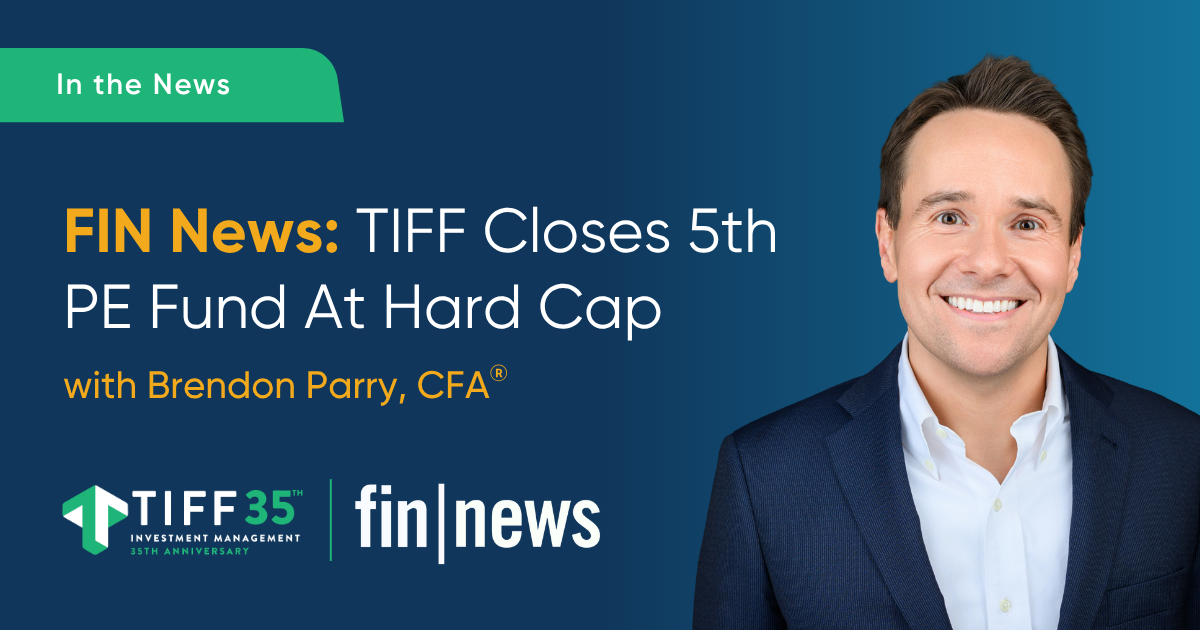
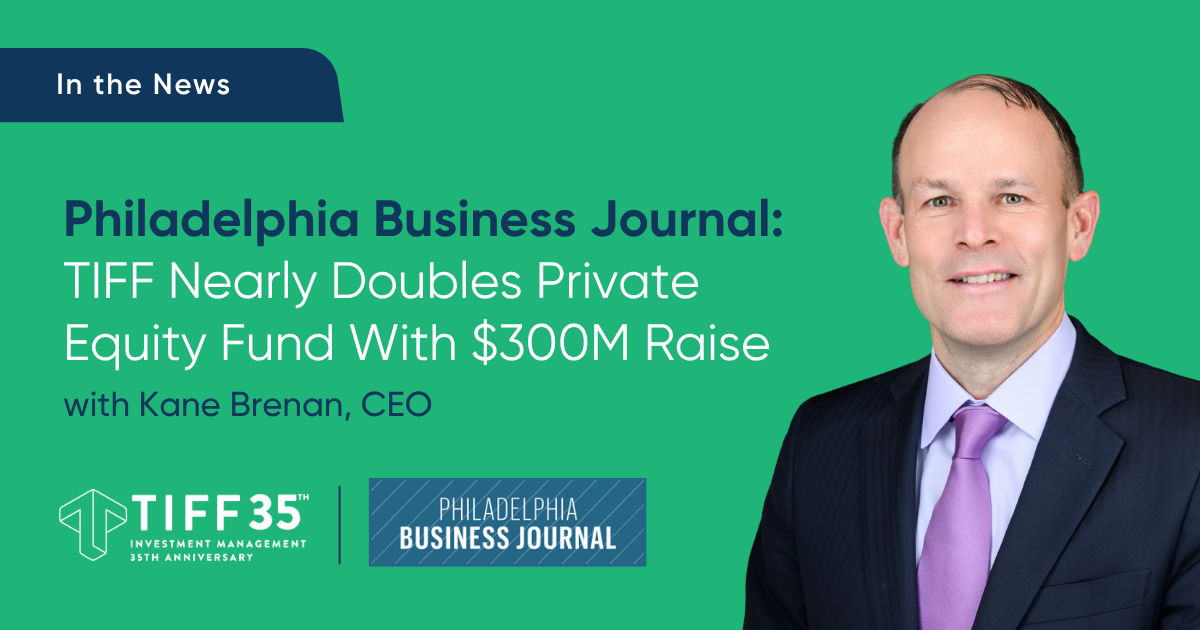
Kane Brenan on CNBC Squawk Box
On Sustainable Investing

Now seems like a good time to share our view on where markets and investors are on the topic of Sustainable Investing today. To start, investor confusion around the terminology and why we should care seems to be ebbing. Yes, sustainability is still defined and perceived in myriad ways, but what it boils down to largely is the efficient use of resources. Any system—a company, an industry, a market, an ecosystem—requires resources to survive. To the extent those resources are harmed or depleted, the survival of that system is at risk. To the extent those resources are maintained or renewed over time, that system has what it needs to sustain itself at least and potentially even thrive. The sustainability movement is a call for change in how we manage our resources, in particular our environmental, human and social resources. Thoughtless exploitation of those resources can work for some period of time and for some portion of the population, but in the end that approach is unsustainable.

Sustainable investing is an extension of this concept. The basic idea is to invest in businesses that employ best practices around the use of all forms of capital: financial, environmental, human, and social. Those businesses possess the best chance not just to survive, but to thrive. And of course sustainable investing also means avoiding businesses with high costs and headline risks due to poor governance and exploitative behaviors. Such behaviors are less and less tolerated by consumers, governments, and regulators. Increasingly, these behaviors make them less attractive to investors, too.

This is an excerpt from a longer article. Please download the PDF to read more.